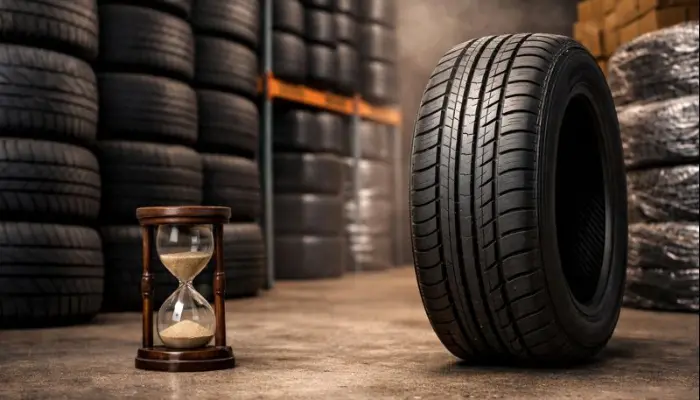
The question of how long do tyres last in Storage is one that concerns every car owner with seasonal or spare sets. The truth is, tires begin to age from the moment they are manufactured, not just when they hit the road. Even when unused, the rubber compounds in your tyres are constantly undergoing a slow chemical process called oxidation. This means that proper storage is not just about saving space; it is about preserving the safety and performance of your investment. Ignoring the right storage conditions can drastically shorten a tire’s lifespan, leading to premature cracking and failure. This guide will provide you with the definitive answer and the best practices to maximize your tyre’s longevity.
The Definitive Answer: Tire Lifespan
Most tire manufacturers and safety experts agree that a tire’s maximum lifespan, regardless of use, is 10 years from its date of manufacture. This is the absolute limit for safety. However, the safe and reliable period for a tire is often much shorter. Many industry bodies recommend that tires be professionally inspected once they reach 5 years of age. When stored correctly, tires can maintain their structural integrity for 6 to 10 years. Poor storage conditions, such as high heat or ozone exposure, can reduce this lifespan significantly. Understanding the factors that accelerate aging is the key to ensuring your stored tyres remain safe and roadworthy.
Phase 1: Factors That Accelerate Tire Aging
Tire rubber contains protective chemicals that migrate to the surface to prevent cracking. Unfortunately, several environmental factors can deplete these chemicals and cause the rubber to harden and crack, a process commonly known as “dry rot.”
|
Factor |
Effect on Tire Longevity |
Ideal Storage Condition |
|---|---|---|
| Oxygen (Oxidation) | The primary cause of rubber hardening and cracking from the inside out. | Store in airtight bags to minimize exposure. |
| Heat | Accelerates the chemical aging process and depletes protective compounds. | Cool environment, ideally between 32°F and 77°F (0°C and 25°C). |
| UV Light | Causes photodegradation, leading to surface cracking and dry rot. | Dark environment, away from direct sunlight or strong artificial light. |
| Ozone | A highly reactive gas that causes rubber to crack, especially in the sidewalls. | Keep away from ozone-producing equipment (e.g., electric motors, furnaces). |
| Humidity | High moisture can lead to condensation and corrosion of the internal steel belts. | Dry environment, away from any water sources. |
Read also: https://carrycrew.co.uk/corporate-office-movers-london-the-seamless-relocation/
Phase 2: Best Practices for Storage Preparation
Before you put your tyres away, a few simple preparation steps can make a massive difference in how long do tyres last in Storage. These steps ensure the rubber is clean, protected, and ready for its long rest.
1. Clean and Dry Thoroughly
Start by washing the tyres with soap and water to remove all traces of brake dust, dirt, and road grime. These contaminants can contain chemicals that accelerate rubber degradation. Ensure the tyres are completely dry before you move to the next step. Do not apply any tire dressings or protectants, as these can sometimes interfere with the rubber’s natural protective compounds.
2. Seal in Airtight Bags
Once clean and dry, place each tire into a large, opaque, airtight plastic bag. Heavy-duty garbage bags or specialized tire bags work well for this purpose. Squeeze out as much air as possible before sealing the bag tightly. This crucial step minimizes oxygen exposure, which is the main culprit in the aging process. The bag also helps to prevent the protective oils in the rubber from evaporating.
3. Proper Positioning and Stacking
The way you position your tyres during storage is vital to prevent permanent deformation. The correct method depends on whether the tyres are mounted on rims or stored alone.
|
Tire Type |
Recommended Storage Position |
Why It Matters |
|---|---|---|
| Tyres Only (Unmounted) | Vertically on a rack or elevated surface. | Prevents flat spots and permanent deformation of the sidewall. Never hang unmounted tyres. |
| Tyres on Rims (Mounted) | Stacked horizontally (no more than six feet high) or hung from a sturdy rack. | The rim provides structural support, allowing for more flexible storage options. |
| Tyres on Vehicle | Not Recommended for long-term storage. | The weight of the vehicle causes flat spots and premature aging of the contact patch. |
Phase 3: The Ideal Storage Environment
The environment is the single biggest factor in determining how long do tyres last in Storage. A cool, dark, and dry space is always the best choice for preserving the rubber’s integrity.
Climate Control is Essential
The ideal storage temperature is stable, remaining between 32°F and 77°F (0°C and 25°C). Extreme heat accelerates aging, while freezing temperatures can make the rubber brittle and prone to cracking. Avoid storing tyres in areas that experience large temperature swings, such as uninsulated sheds or garages. A climate-controlled basement or a dedicated storage facility is the best option for long-term preservation.
Keep Away from Ozone and Chemicals
Ozone is highly destructive to rubber. Keep your tyres away from any equipment that produces ozone, including electric motors, furnaces, generators, and fluorescent lighting fixtures. Additionally, store them away from solvents, fuels, lubricants, and other chemicals. Direct contact with these substances can rapidly degrade the rubber compound, making the tyres unsafe for use.
Phase 4: The Role of Removal Firms Near Me
While you can prepare your tyres for storage yourself, the physical act of moving and storing them, especially if you lack space, can be challenging. This is where professional services, often provided by removal firms near me, offer a significant advantage.
Professional Tire Storage Services
Many professional removal and storage companies offer specialized tire storage services. These facilities are specifically designed to meet the ideal conditions required for long-term preservation. They provide climate-controlled, dark, and ozone-free environments, ensuring your tyres are protected from all the major aging factors. This service is an excellent investment for seasonal tyres or for when you simply do not have the space at home.
Read also: https://carrycrew.co.uk/it-office-relocation-london-keep-your-systems-running/
Transporting Tyres Safely
Tyres are heavy and bulky, making them awkward to move without the right equipment. Professional removal firms near me have the necessary tools, such as dollies and secure transport vehicles, to move your tyres without damaging them or causing personal injury. They also understand the importance of securing the tyres properly during transit to prevent deformation or shifting. This professional handling minimizes the risk of damage that could compromise the tyre’s safety before it even reaches the storage unit.
|
Feature |
DIY Storage (Garage/Shed) |
Professional Storage (Removal Firms Near Me) |
|---|---|---|
| Climate Control | Unstable; prone to extreme heat and cold. | Stable temperature and humidity; ideal for long-term preservation. |
| Ozone/UV Exposure | High risk from motors, furnaces, and windows. | Zero or minimal exposure; purpose-built environment. |
| Handling/Transport | High risk of personal injury and deformation during transport. | Handled by trained staff using specialized equipment. |
| Cost | Low initial cost; high risk of premature tire replacement. | Higher initial cost; maximum tire lifespan and safety ensured. |
(FAQs)
Q: How can I tell the exact age of my tyres?
A: You can determine the exact age by checking the DOT (Department of Transportation) code on the sidewall. The last four digits indicate the week and year of manufacture. For example, “1522” means the 15th week of 2022.
Q: Can I store my tyres in a plastic bag?
A: Yes, storing them in an opaque, airtight plastic bag is highly recommended. The bag minimizes oxygen exposure and helps to keep the protective oils in the rubber from evaporating, which is crucial for answering how long do tyres last in Storage.
Q: What is “dry rot” and how do I spot it?
A: Dry rot is the common term for rubber degradation caused by oxidation and UV exposure. You can spot it by looking for small cracks in the sidewall or between the tread blocks. If you see these cracks, the tyre is unsafe and should be replaced immediately.
Q: Is it safe to use a tyre that has been stored for 8 years?
A: While 8 years is within the 10-year maximum, it is essential to have the tyre professionally inspected before use. A technician will check for internal damage, structural integrity, and signs of dry rot that may not be visible to the naked eye.
Conclusion
Understanding how long do tyres last in Storage is fundamentally about controlling the environment. By following the preparation steps cleaning, bagging, and proper positioning you take control of the aging process. For the ultimate peace of mind and maximum longevity, consider utilizing the specialized services offered by removal firms near me. Their climate-controlled facilities and professional handling ensure your tyres are protected from the elements, guaranteeing they remain safe and ready for the road when you need them next. Invest in proper storage to ensure your tyre investment lasts the full distance.