Flat-screen televisions are one of the most fragile and expensive items to move. Their large, thin screens are highly susceptible to damage from impact, pressure, and even slight flexing. Unlike older, bulkier CRT televisions, modern LED, OLED, and Plasma screens require specialized care and packing techniques to ensure they arrive at your new home intact. Knowing the right way to pack a TV is essential for protecting your investment and avoiding costly replacements. This guide provides a detailed, professional-grade method for safely preparing your television for transport, whether you are moving it yourself or hiring a professional moving company.
Phase 1: Preparation and Essential Supplies
Before you begin the packing process, a few simple preparation steps can significantly reduce the risk of damage. Always unplug the TV and allow it to cool down completely, especially if it is a plasma model, as heat can make the screen more vulnerable to damage. The most crucial element is the box. If you still have the original manufacturer’s box, use it. It is custom-fitted with the correct foam inserts and is the safest option. If not, you must invest in a purpose-built TV moving box kit.
Essential Packing Supplies for a TV
Do not attempt to pack a flat-screen TV in a standard cardboard box. The box must be double-walled and include foam or specialized inserts to secure the screen and protect the corners. The goal of the packing materials is to create a rigid, protective shell around the screen and prevent any movement within the box.
Read also: https://carrycrew.co.uk/london-office-movers-how-to-plan-a-office-relocation/
Essential TV Packing Supplies
|
Supply Item |
Purpose |
Pro Tip |
|---|---|---|
| TV Moving Box Kit | Double-walled, expandable box with foam corner protectors. | Essential for TVs over 40 inches; provides the best structural support. |
| Soft Moving Blanket | First layer of protection for the screen and casing. | Use a clean, soft blanket to prevent scratches from dust or debris. |
| Bubble Wrap | Extra cushioning for the screen and around the edges. | Use large-bubble wrap and secure it with low-tack painter’s tape, not directly on the screen. |
| Plastic Ziploc Bag | Storing all remote controls, cables, and screws. | Label the bag clearly with the TV’s location (e.g., “Living Room TV Cables”). |
| Packing Tape (Strong Adhesive) | Securing the box and foam inserts. | Use strong packing tape to seal the box completely, reinforcing all seams. |
Phase 2: The Step-by-Step Packing Process
The right way to pack a TV involves a methodical, multi-layered approach to protect the screen, the most vulnerable part of the unit. Never apply tape directly to the screen or the TV casing, as the adhesive can cause permanent damage. Start by carefully removing the stand or wall mount. Place all screws and small parts into the labeled Ziploc bag immediately. This prevents loss and ensures a smooth reassembly at your new home.
Securing the Screen and Corners
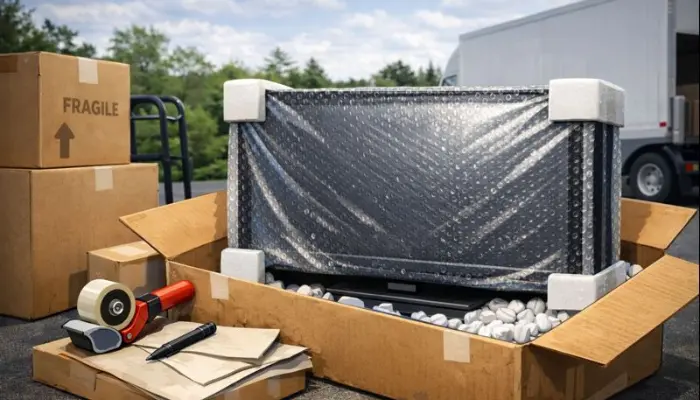
The screen must be protected from both direct impact and internal pressure. A common professional technique is to place a piece of cardboard cut to the exact size of the screen over the display before applying the final layers of padding. Next, wrap the entire TV in a soft moving blanket or furniture pad. Secure the blanket with stretch wrap or packing tape around the blanket itself, ensuring the tape never touches the TV’s surface.
Intent-Specific – Step-by-Step TV Packing Method
|
Step |
Action |
Purpose |
|---|---|---|
| 1. Disconnect & Document | Unplug all cables, remove the stand, and place small parts in a labeled bag. | Prevents loss of essential components and prepares the TV for flat packing. |
| 2. Protect the Screen | Cover the screen with a soft blanket, then a layer of bubble wrap, securing with stretch wrap. | Shields the delicate screen from scratches and minor impacts. |
| 3. Secure the Corners | Place foam corner protectors (from the TV box kit) onto all four corners. | Prevents the most common point of damage during handling and transit. |
| 4. Box the TV | Carefully slide the TV into the double-walled box, ensuring it is centered and snug. | Provides the final, rigid layer of protection and allows for safe stacking. |
| 5. Seal and Label | Seal the box with strong tape and clearly label all sides with “FRAGILE” and “THIS SIDE UP.” | Communicates handling instructions to movers and prevents the box from being laid flat. |
Phase 3: Loading and Transporting the TV
The packing is only half the battle; the right way to pack a TV also includes the right way to move a TV. A flat-screen television must always be transported in an upright position, never laid flat. Laying a large flat-screen TV flat can cause the screen’s weight to be distributed unevenly, leading to internal damage or cracking from road vibrations. It must be secured tightly against a soft surface, such as the side of a mattress or a padded wall of the moving truck.
Securing the TV in the Moving Vehicle
Once in the truck, the TV box should be placed between two soft, stable objects, such as mattresses or large, soft furniture. Use moving straps or rope to secure the TV to the wall of the truck, ensuring it cannot tip over or shift during transit. The box should be clearly visible to the movers, and you should verbally instruct them that it must remain upright at all times.
Read also: https://carrycrew.co.uk/man-and-van-london-your-reliable-moving-removals-service/
TV Transport and Handling Rules
|
Rule |
Why It Is Important |
Consequence of Violation |
|---|---|---|
| Always Transport Upright | Prevents uneven pressure distribution and internal damage to the screen. | Screen cracking or internal component failure. |
| Do Not Stack | The TV box should be the top-most item or secured vertically against a wall. | Crushing of the screen from the weight of other boxes. |
| Avoid Extreme Temperatures | Extreme heat or cold can damage the delicate electronics and screen materials. | Picture distortion or permanent electronic failure. |
| Secure Tightly | Prevents the TV from shifting or falling over during sudden stops or turns. | Physical damage to the casing, screen, or stand. |
FAQs
Can I pack a TV without the original box?
Yes, using a strong TV box with extra padding works well.
Should a TV be transported flat or upright?
A TV should always be transported upright.
Is bubble wrap enough to protect a TV?
Bubble wrap is essential but should be combined with foam and a sturdy box.
Is professional TV packing worth it?
Yes, especially for expensive or large-screen TVs.
Final Thoughts
Understanding the right way to pack a TV helps protect one of your most valuable household items during a move. Proper materials, careful handling, and correct positioning are key to damage-free transport. By following these steps, you can move your TV safely and enjoy peace of mind throughout your relocation.