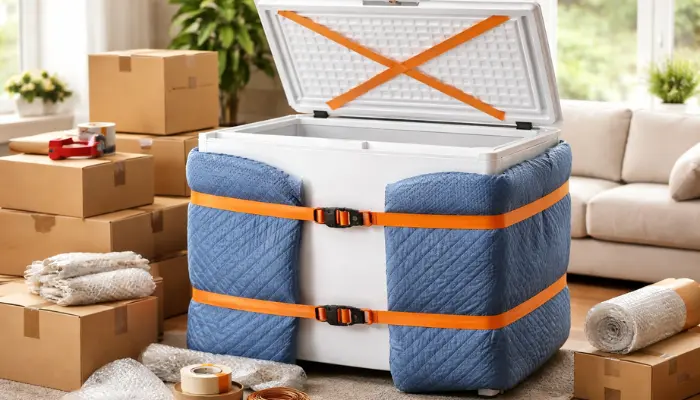
Whether you are moving house, going on an extended trip, or simply putting a spare appliance into long-term storage, knowing how to properly store a freezer is critical. Improper storage can lead to two major, costly problems: the growth of mold and mildew, and damage to the compressor and cooling system. A freezer is a significant investment, and preparing it for storage requires more than just unplugging it. The process involves meticulous cleaning, complete defrosting, and strategic positioning to ensure the appliance remains in perfect working order until you are ready to use it again.
Phase 1: Emptying, Defrosting, and Cleaning
The most common mistake when storing a freezer is skipping the defrosting and drying steps. Any residual moisture, combined with a closed door, creates the perfect environment for mold and musty odors to develop within weeks. This phase is non-negotiable for any storage period longer than a few days. Plan to start this process at least 24 to 48 hours before the freezer needs to be moved or stored.
The Defrosting Process
Defrosting a freezer can be time-consuming, but rushing it can damage the internal components. Never use sharp objects to chip away ice, as this can puncture the cooling coils. The safest method is to turn off the appliance, unplug it, and allow the ice to melt naturally. You can speed up the process by placing bowls of hot water inside the freezer and closing the door for 15-20 minutes at a time.
Defrosting and Cleaning Checklist
|
Step |
Action |
Purpose |
|---|---|---|
| 1. Empty & Unplug | Remove all food and turn off the power supply at the wall. | Prevents food spoilage and electrical hazard. |
| 2. Defrost | Place towels and a drip pan inside, and allow ice to melt naturally (or use hot water bowls). | Prevents damage to cooling coils and prepares for cleaning. |
| 3. Clean | Wash the interior with a solution of warm water and baking soda or white vinegar. | Neutralizes odors and removes any lingering food residue that could feed mold. |
| 4. Dry Completely | Wipe down every surface, including seals and gaskets, and leave the door open for 24 hours. | Eliminates all moisture, which is the primary cause of mold and mildew. |
Read also: https://carrycrew.co.uk/it-office-relocation-london-keep-your-systems-running/
Phase 2: Preparing the Freezer for Transit and Storage
Once the freezer is completely clean and dry, the focus shifts to protecting the exterior and the internal mechanics. Proper handling during transit is crucial, as moving a freezer incorrectly can damage the compressor. The golden rule for moving is to keep the freezer upright at all times. If it must be laid on its side for a short period, it should be placed on the side opposite the compressor line.
Protecting the Compressor
The compressor contains oil that lubricates the system. If the freezer is laid on its side, this oil can flow into the cooling lines. When the freezer is powered on again, the compressor can be damaged due to a lack of lubrication. If you must tilt the freezer, ensure it is returned to an upright position for at least 24 hours before plugging it back in. This allows the oil to drain back into the compressor sump.
Storage Preparation for Chest vs. Upright Freezers
|
Feature |
Chest Freezer Preparation |
Upright Freezer Preparation |
|---|---|---|
| Defrosting | Easier, as water drains to the bottom; use the drain plug if available. | More challenging, as water can pool on shelves; requires more towels and sponging. |
| Door Position | Prop the lid open slightly (e.g., with a small block of wood or a towel). | Prop the door open slightly (e.g., with a magnet or a small piece of foam). |
| Moving/Transit | Can be moved on its side for a short time, but keep it upright for 24 hours before use. | Must be kept upright as much as possible; less tolerant of being laid down. |
| Internal Storage | Store baskets and shelves inside, wrapped in paper to prevent rattling. | Remove glass shelves and wrap them separately to prevent breakage. |
Phase 3: Choosing the Right Storage Environment
The environment where you store your freezer will significantly impact its longevity. The ideal location is a dry, climate-controlled space. Avoid storing the appliance in areas prone to extreme temperature fluctuations or high humidity. Garages, sheds, and non-climate-controlled storage units can expose the freezer to conditions that accelerate rust, damage the electrical components, and degrade the rubber seals.
Final Steps to Prevent Mold and Odor
Even after a thorough cleaning, a closed freezer can develop a musty smell. The final, most important step in how to properly store a freezer is ensuring continuous airflow. Prop the door open slightly to allow air circulation. You can also place a moisture and odor absorber inside the unit to maintain a fresh environment.
Read also: https://carrycrew.co.uk/office-relocation-services-london-for-modern-businesses/
Final Storage Checklist
|
Item |
Action |
Why It’s Important |
|---|---|---|
| Door/Lid | Prop open slightly (1-2 inches) with a towel or small block. | Essential for continuous air circulation to prevent mold and mildew growth. |
| Odor Absorber | Place a box of baking soda or a charcoal briquette inside. | Absorbs any residual moisture and neutralizes odors during long-term storage. |
| Exterior Protection | Wrap the freezer in a moving blanket or furniture pad. | Protects the exterior finish from scratches and dents during transit and storage. |
| Power Cord | Secure the power cord to the back of the unit with tape. | Prevents the cord from dragging or being damaged during the move. |
FAQs
Do I need to defrost a freezer before storage?
Yes, defrosting is essential to prevent moisture damage and mold growth.
Can I store a freezer in a garage?
Yes, but only if the garage is dry, clean, and protected from extreme temperatures.
Should the freezer door be closed during storage?
No, leave it slightly open to allow airflow and prevent odors.
How long should a freezer sit before use after storage?
Let it stand upright for at least a few hours before plugging it in.
Final Thoughts
Knowing how to properly store a freezer helps protect your appliance from damage and ensures long-term reliability. Proper preparation, correct positioning, and the right environment make all the difference. With these steps, you can store your freezer confidently and safely until it is ready to be used again.