For avid readers and collectors, a personal library represents a significant investment and a source of great personal value. Moving books, however, is notoriously difficult because of their immense weight and susceptibility to damage. Mastering How to Pack Books is not just about fitting them into a box; it is about protecting their spines, covers, and pages from the moment they leave the shelf until they are safely unpacked in your new home.
The Golden Rule: Choose the Right Box Size
The single most important factor when learning How to Pack Books is the size of the box. Books are one of the heaviest items in any household move, and using a box that is too large is the most common mistake. A box full of books can easily weigh over 70 pounds, making it a serious hazard for movers and a risk for the box’s structural integrity.
The Book Box: Small and Sturdy
The ideal container for books is the small moving box, often referred to as a “book box.” These are typically 1.5 cubic feet (around 12″ x 12″ x 12″) and are designed to be filled completely without exceeding a safe lifting weight of 40-50 pounds. Never use large or extra-large boxes for books. Even if only partially filled, the concentrated weight can cause the box bottom to fail or the sides to bulge.
Reinforcement is Key
Before packing, always reinforce the bottom of your book boxes. Use the “H” taping method, applying three strips of strong packing tape across the center seam and along the two side seams. This small step provides the necessary structural support to handle the dense, concentrated weight of a box full of literature.
Read also: https://carrycrew.co.uk/london-office-movers-how-to-plan-a-office-relocation/
Box Size Intent: Weight vs. Volume
|
Box Size |
Recommended Contents | Consequence of Misuse |
Safe Weight Limit |
|---|---|---|---|
| Small (Book Box) | Books, CDs, Tools, Canned Goods (Heavy, dense items). | Overfilling a large box with books can cause the bottom to fail. | 40 – 50 lbs |
| Medium | Pots, Pans, Small Appliances, Folded Clothes (Medium-weight items). | Using a medium box for books makes it too heavy to lift safely. | 50 – 65 lbs |
| Large/Extra-Large | Linens, Pillows, Towels, Lampshades (Light, bulky items). | Using a large box for books is dangerous and risks injury. | 65 – 70 lbs |
The Three Professional Packing Methods
Once you have the right box, the next step in How to Pack Books is choosing the correct orientation. There are three primary methods, each designed to protect the book’s spine and covers.
Method 1: Spine Down (The Best Method)
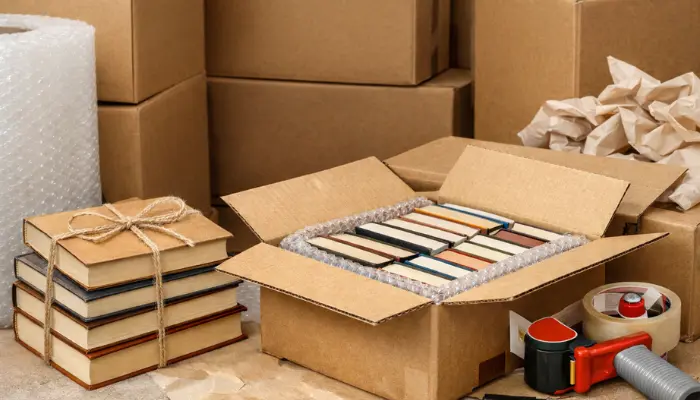
The safest way to pack most books is to stand them upright on their spine, just as they sit on a shelf. This prevents the pages from shifting and the spine from warping. Pack them tightly side-by-side to prevent movement, filling any remaining space with crumpled packing paper or soft items like socks.
Method 2: Flat Stacking (For Paperbacks and Magazines)
Paperbacks, magazines, and softcover books can be stacked flat in the box. This is acceptable because their flexible spines are less prone to damage from pressure. Ensure you alternate the direction of the spines with each layer to keep the stack level and prevent the box from becoming lopsided.
Method 3: Spine Against Spine (For Valuable Books)
For rare, antique, or highly valuable books, a combination of methods is used. Stand them upright, but place a piece of cardboard or bubble wrap between the books to prevent rubbing. Never pack books with the spine facing up or with the pages facing down, as this can damage the binding and covers.
Packing Methods by Book Type
Different types of books require specific handling to ensure their preservation during the move.
|
Book Type |
Recommended Packing Method | Box Type |
Key Protection Tip |
|---|---|---|---|
| Hardcover/Textbooks | Upright, spine down, packed tightly. | Small (Book Box) | Use a layer of packing paper on the bottom for cushioning. |
| Paperbacks/Novels | Flat stacking, alternating spine direction. | Small (Book Box) | Fill all voids with soft, crumpled paper to prevent shifting. |
| Rare/Antique Books | Individually wrapped in acid-free paper, upright. | Small (Book Box) | Transport these boxes personally, if possible, or label them “Fragile/High Value.” |
| Photo Albums/Scrapbooks | Flat stacking, with bubble wrap between each album. | Medium | Do not pack with other heavy items; keep them separate. |
Protecting Your Collection: Advanced Tips
For those with large or valuable collections, a few advanced techniques are necessary to ensure the books are protected from dust, moisture, and physical damage.
Protecting Against Moisture
Moisture is the enemy of books, leading to mold, mildew, and warped pages. Before packing, ensure your books are completely dry. Avoid packing books in plastic bags, which can trap moisture. If you are moving during a rainy season, line the inside of your box with a large plastic bag before packing, and seal the bag once the box is full.
The Use of Void Fillers
A partially filled box is a dangerous box. The contents will shift during transit, causing the books to rub against each other and damage the covers. Use crumpled packing paper, bubble wrap, or even soft, clean towels to fill every single empty space in the box, immobilizing the books completely.
Read also: https://carrycrew.co.uk/man-and-van-london-your-reliable-moving-removals-service/
Common Mistakes to Avoid When Packing Books
Knowing How to Pack Books correctly means avoiding these common errors that can lead to damage and injury.
|
Mistake |
Consequence |
Corrective Action |
|---|---|---|
| Using Large Boxes | Box is too heavy, risks injury and box failure. | Only use small, sturdy “book boxes” (1.5 cu ft). |
| Packing Spine Up | Damages the book’s binding and spine structure. | Always pack books spine down or flat. |
| Leaving Voids | Books shift and rub against each other, damaging covers. | Fill all empty spaces with crumpled paper or soft material. |
| Packing with Heavy Items | Causes pressure damage to the books and makes the box too heavy. | Books should only be packed with other light, non-damaging items. |
FAQs
Should books be packed flat or upright?
Books should be packed flat or spine-down to prevent damage.
What size box is best for packing books?
Small boxes are best to avoid excessive weight.
Can I pack books with other items?
Yes, but only lightweight items such as linens or clothes.
Is it worth hiring movers for book packing?
Yes, especially if you have a large or valuable collection.
Final Thoughts
Learning how to pack books correctly helps protect your collection and makes moving easier. Proper planning, correct box sizes, and safe packing techniques are essential. By following these tips, you can transport your books safely and enjoy a smooth moving experience.